Posts from the ‘Christianity’ Category

Our Covenant Keeping God

Throughout history, Jehovah has always dealt with mankind according to covenants. He is a God of order, and does not rule in an arbitrary or capricious manner. Rather, He lets us know the conditions of His covenant so that we know what His promises are and can then exercise faith in His Word to us. Thus, Jehovah establishes covenant relationships and has signs to serve as a reminder of that covenant. Unfortunately, due to the divisions of our Bibles into Old and New Testaments, there is a common misperception that there are only two covenants. In fact, there are three covenants contained in the Hebrew Scriptures and one in the Greek Scriptures.

The first covenant, one that is still in force, is the Noahic covenant. It was established between God and Noah after the flood.

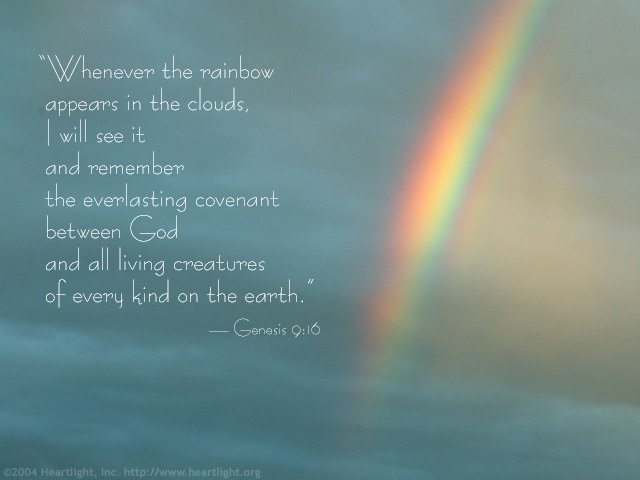
“And as for Me, behold, I establish My covenant with you and with your descendants after you, and with every living creature that is with you: the birds, the cattle, and every beast of the earth with you, of all that go out of the ark, every beast of the earth. Thus I establish My covenant with you: Never again shall all flesh be cut off by the waters of the flood; never again shall there be a flood to destroy the earth.” And God said: “This is the sign of the covenant which I make between Me and you, and every living creature that is with you, for perpetual generations: I set My rainbow in the cloud, and it shall be for the sign of the covenant between Me and the earth. (Genesis 9:9-13 NKJV)

I am thankful that this is in effect, as another worldwide flood would be a bummer. The sign of this covenant is the rainbow, and still occurs today. In Hawaii, it occurs on a daily basis! This covenant is also one that is unconditional, and was entered into after Noah sacrificed an animal on the altar in worship. Thus it was established by the shedding of blood.

The next covenant I want to consider is the Abrahamic covenant. In this one, God covenants with Abraham to give his descendants through Isaac possession of the land of Israel perpetually. Jehovah also promised that through Abraham’s seed (Jesus) all nations will be blessed. This covenant is also unconditional, and is still in force. In fact, those of us who have been reconciled unto God by His Son are those who are part of “the blessed.”

Now the Lord had said to Abram: “Get out of your country, From your family And from your father’s house, To a land that I will show you. I will make you a great nation; I will bless you And make your name great; And you shall be a blessing. I will bless those who bless you, And I will curse him who curses you; And in you all the families of the earth shall be blessed.” (Genesis 12:1-3)

On the same day the Lord made a covenant with Abram, saying: “To your descendants I have given this land, from the river of Egypt to the great river, the River Euphrates— the Kenites, the Kenezzites, the Kadmonites, the Hittites, the Perizzites, the Rephaim, the Amorites, the Canaanites, the Girgashites, and the Jebusites.” (Genesis 15:18-21)

Again, there were no conditions listed, and the covenant was sealed with a blood sacrifice.

The next covenant was the Mosaic covenant, made between Jehovah and the nation of Israel. This covenant was conditional unlike the others. It is within this covenant that most of the Bible is given. This covenant was given at Mount Sinai and was in force until John the Baptist (Luke 16:16). The covenant, though perfect from God’s side, was beyond human ability to fully keep. It was designed to be temporary, and served to condemn the world under sin. The sign of the Mosaic covenant was circumcision. This covenant was fulfilled at the cross when Jesus Christ ushered in the New Covenant with the shedding of His own blood. While the Mosaic covenant has been fulfilled and is not in force, but in no way does that negate the Noahic or Abrahamic covenants.

The current covenant is the covenant of Grace. It was also initiated by the shedding of blood, but this time by the perfect sacrifice of Jesus on the cross. The sign of our New Covenant are both internal and external. Internally, we experience circumcision of the heart at baptism (Colossians 2:12), and externally we show the covenant to others when we partake of the elements of communion on the first day of the week. What is the significance of this? It is that we are in covenant relationship with Jehovah God, whose nature is that of a covenant maker and keeper. He is not going to change His mind and decide to cancel our covenant. We are secure in Christ. No one is ever lost because God abandoned them or lost them. Jesus doesn’t fire people; they quit on Him! His part of the covenant is completed. We only need to accept the offer of salvation as He has prescribed, and walk in covenant obedience to Christ.

Now may the God of peace who brought up our Lord Jesus from the dead, that great Shepherd of the sheep, through the blood of the everlasting covenant, make you complete in every good work to do His will, working in you what is well pleasing in His sight, through Jesus Christ, to whom be glory forever and ever. Amen. (Hebrews 13:20, 21)

20130409-001245.jpg

The Vicar of Christ

Last week, many around the world were watching with rapt attention as the Roman Catholic Church went through the process of selecting a new pope. Among the people’s many titles, is “Vicar of Christ” which means he is Christ’s representative on the earth. “Vicar” is the word we get “vicarious” from, and it is used when describing Christ’s vicarious death for us, as he took the punishment we deserved.But the question to be asked is this: who is the real Vicar of Christ? Surprisingly, the New Testament does answer that for us. Because, whether you realize it or not, if you are a born again Christian, YOU are the Vicar of Christ to those around you. Here’s how I got there.

Now then, we are ambassadors for Christ, as though God were pleading through us: we implore you on Christ’s behalf, be reconciled to God. (II Corinthians 5:20 NKJV)

Christ uses us to be His mouthpiece to the lost. Jesus is not showing up personally and telling lost people to follow Him. No, that is what He commanded His disciples to do, and He is not going to give us mission and not expect for us to carry it out. We are His voice, His hands, and His feet to carry the Gospel message to the world and plead with with them to be reconciled to God. That is why Jesus began the Great Commission with “all authority has been given to me….go therefore”. We aren’t going out for our own sakes. We go in the authority He has been given, and has delegated to His servants.

And whatever you do in word or deed, do all in the name of the Lord Jesus, giving thanks to God the Father through Him. (Colossians 3:17 NKJV)

Not only is our message one that is from God, but our actions are done in His name as well. In context, this verse is talking about the way we minister to one another in the church. But the principle carries over to all that we do. With that in mind, we need to always be cognizant of the fact that, as Christians, everything we do on a daily basis should be something that represents who Christ is. Being a vicar of Christ is not a part-time job.

You are our epistle written in our hearts, known and read by all men; clearly you are an epistle of Christ, ministered by us, written not with ink but by the Spirit of the living God, not on tablets of stone but on tablets of flesh, that is, of the heart. (II Corinthians 3:2, 3 NKJV)

Not only do we as Christians carry His message, we are often the message itself. The saying that “you are the only Bible some people will ever read” is definitely true. In fact, if people don’t see the truth of our message being lived out in front of them, they will give no credence to the message we speak. In gourmet cooking, presentation is important because food must look appetizing or no one will want to eat it. The saying goes, “the eyes eat first”. The same is true of our walk with God. People need to see the truth of our message before they hear the truth of our message.

I am crucified with Christ: nevertheless I live; yet not I, but Christ liveth in me: and the life which I now live in the flesh I live by the faith of the Son of God, who loved me, and gave himself for me. (Galatians 2:20 KJV)

So there you have it. While the world press have been guessing who the Vicar of Christ was going to be, they didn’t realize that all the needed to do for an answer to that question was to go and find a Christian. We are all Vicars of Christ as He lives and speaks through us.

20130317-001249.jpg

Eating Every Day

Much of our everyday existence is filled with routine. While some things are only done occasionally, there are a whole host of things that we do on a daily basis that are so routine that we may not even realize that we do them. And that’s not always a bad thing, for there are spiritual and temporal habits that are healthy and should be second nature to us. What I want to talk about are the things we ought to do on a daily basis so that they become part of who we are, but that get relegated to one day a week or times of deep distress and spiritual need. The apostle Paul, in his letter to the Colossians talked about some of those things.

Let the word of Christ dwell in you richly in all wisdom, teaching and admonishing one another in psalms and hymns and spiritual songs, singing with grace in your hearts to the Lord. And whatever you do in word or deed, do all in the name of the Lord Jesus, giving thanks to God the Father through Him. (Colossians 3:16, 17 NKJV)

The foundation for all of this, is letting the word of Christ dwell in you. But not just a sparingly, but richly. We need to have an overflowing abundance of the Word of God inside of us, so that it is always coloring whatever we do on a daily basis. Now I don’t care how good your preacher or teachers are, they cannot get this level of the Word into you, any more than you could sit down one day and eat enough physical food to nourish your body for the rest of the week! We have to hunger and thirst after spiritual food, and that happens when we go to the Word and take it in on a daily basis.

In the physical realm, there comes a point when someone is starving that they lose their appetite. In time, they become so weak that they lack the energy and will to eat. The same thing can happen spiritually if we do not feast in the Word of God. What is amazing about the Word of God is that the more you read it, the hungrier you get for it. We need to feast on the Word in order to grow and thrive.

as newborn babes, desire the pure milk of the word, that you may grow thereby, (I Peter 2:2 NKJV)

What will the result of an overflowing abundance of the Word of God be in our lives? We will begin to have the Word come to mind just when we need it, or when someone else needs it. We can be a resource to help others along the way. We also begin to see things from a scriptural perspective, which is good, because in the end, it only really matters what God thinks about things, not what our own opinions are.

Your word I have hidden in my heart, That I might not sin against You. (Psalms 119:11)

If we continually feast on the Word, there can press on towards the time when whatever we say and do will be affected by what we have taken in from our consumption of the truths of God’s Word. Does that mean that we cannot do anything at all without chapter and verse to authorize it? Of course not. Try finding a verse that says to floss your teeth! But the point is that when we start to see the pattern, albeit through a glass darkly, of how God thinks and the principles that we should live by, we can slowly move to conform our daily lives into ones that honor God and our Savior Jesus Christ. We can start doing things “in His name”, for we are His ambassadors here on the earth.

The natural and continual by product of this type of living is a spirit of thanksgiving. Our gratitude will be another thing that permeates out thinking and our actions. In turn, that gratitude will spur us on to greater love and good works. Which will make us grateful, etc. it’s a continual upward spiral! But again, the foundation is a continual taking in of the Word. If we stop and depend on what we read in the past alone, we will grow weak, lose our spiritual appetite, and starve. We will also be ungrateful.

So the next time you pick up the table, try doing this: open it up, pray, and then as you begin to read say, “lets eat!” and spiritually chow down. After all, you have to be full before you can overflow.

20130313-003105.jpg

Our Prognosis

Whenever there is a patient with a newly discovered medical condition, one of the first questions families ask the physician is, “what’s the prognosis?”. They do this because they want to know what the eventual outcome will be for their friend or family member. There is a measure of comfort in knowing what to expect, for we generally fear the unknown. As nearly as possible, the doctor gives the expected outcome so that people can make intelligent decisions about medical care. With that in mind, doctors are very careful about the prognosis they give, since life and death decisions are often made based on their professional opinion. If they are wrong, the results can be tragic.

We serve a God who also makes a prognosis. And when He does, it is always accurate and we can make decisions of eternal significance based on what he says. We can do that because Jehovah has foreknowledge. The Greek word used in the New Testament that is translated as “foreknowledge” is the word “prognosis”. Unlike with humans, when God gives a prognosis based on His omniscient foreknowledge, it is never wrong. Let’s see a few times this word is used and look at what it tells us about our Heavenly Father.

During the apostle Peter’s sermon on the day of Pentecost, he made the following statement about Jesus Christ:

“Fellow Israelites, listen to this: Jesus of Nazareth was a man accredited by God to you by miracles, wonders and signs, which God did among you through him, as you yourselves know. This man was handed over to you by God’s deliberate plan and foreknowledge; and you, with the help of wicked men, put him to death by nailing him to the cross. (Acts 2:22, 23 NIV)

The crucifixion of Jesus was not an unforeseen hiccup in the plan of God. One of the things that made it “the fulness of time” for Jesus to come was that Jehovah knew that if Jesus came in the flesh at this point in history He would be crucified. That was the point, since Jesus was coming to seek and save the lost. Does that mean God manipulated those responsible and somehow forced them to crucify Jesus? Of course not! Fore knowing something and foreordaining something are two very different things. God foreknew what evil men would do and simply accommodated it into His plan.

But why would The Father allow that and even plan for it? Out of love for us and for our salvation. God had planned that all who would come to Christ for salvation would be saved. He didn’t foreordain some to come and others not to come. Our election was based on foreknowledge that we would come to Him(1 Peter 1:2). And knowing that, He made provision for all who would come to make it from justification to glorification. What was necessary was for us was to be “in Christ”.

But this says something more profound about his love for us. Paul, in the letter to the Christians at Ephesus, says that our election (which we already saw was according to foreknowledge) occurred before the foundation of the world.

just as He chose us in Him before the foundation of the world, that we would be holy and blameless before Him. In love (Ephesians 1:4 NASB)

He chose us by choosing Christ as our Savior. In doing so, He was choosing all who are “in Christ” as well. That means, before the world existed, Jehovah God knew what would happen to His creation and looked down through time. In His foreknowledge He knew each of us individually who would respond to the Gospel. He looked at each of us, knowing how we would blow it, and how we would be helpless, but also that we would come to Him someday, and said “yes, I will go to the cross for every one of them that come to Him in faith.” He looked down the corridors of time and saw John, Tom, Susan, Whit, Cory, Hannah, (your name here), and even me, and said “they are worth it. I will go and suffer and give my life, because if I do, they will come to me and I can save them.” Stop and contemplate that for a minute, or an hour, or a day. Jesus’ prognosis for each one of us was that if He would bleed and die and pay the debt for our sins, we would respond. And based on that, He had compassion on us, emptied Himself, and took the form of a servant, being obedient unto death, even the death of the cross (Philippians 2). There is something to dwell on the next time you take Communion.

A few years ago, a song was recorded by Hillsongs Australia called, “So You Would Come” and I think the words are an appropriate way to conclude this post.

Before the world began
You were on His mind
And every tear you cry
Is precious in His eyes
Because of His great love
He gave His only Son
Everything was done
So you would come

Nothing you can do
Could make Him love you more
And nothing that you’ve done
Could make Him close the door
Because of His great love
He gave His only Son
Everything was done
So you would come

Come to the Father
Though your gift is small
Broken hearts, broken lives
He will take them all
The power of the Word
The power of His blood
Everything was done
So you would come

(Copyright 1997, Hillsongs United)

20130216-010923.jpg

Misappropriation of Funds

Misappropriation of Funds
Back in my Navy days, there was a form of theft that was prosecuted called “misappropriation”. It occurred when someone would take something that belonged to another work center or division and use it for their own division. It was different than larceny because the person didn’t take it for personal use. The money or items never left the ship. But it was still a crime because as a result of the misappropriation, supplies would have to be reordered and money was wasted.

Sometimes, I wonder if misappropriation is happening in the Christian community in America. Jesus Christ set out what the priorities of the church were to be, and our use of church funds ought to be a reflection of those priorities. After all, Jesus said “where your treasure is, there will your heart be, also.” (Matthew 6:21)

The priorities, as set forth in the New Testament, are evangelism, care for orphans and widows, and ministering to the needs of others. But is that where our money is being spent? Or is the priority in the American church the comfort of the members, building bigger ministries, and marketing a user friendly inoffensive message? Have we turned from being fishers of men to being keepers of the aquarium?

In light of The Lord’s priorities, how do we justify multimillion dollar building projects? There was no such thing as a church building for the first 300 years of the Church and they changed the world! Lets see what could be done with the money used for a building expansion at a cost of $20 million if it were not spent on the comfort of the flock.

The average cost for sending a missionary from America is $6032 a year. (It is even less for support of indigenous missionaries). That $20 million dollars would support 300 missionaries for 10 years and result in the salvation of those who otherwise would have no Gospel witness. Instead we make the church larger and offer more programs to attract spiritual consumers that will be called "Christians" because they sign their names on a card, or slip their hand up for prayer when no one else is looking around.
Ideally, we could have a two for one special and support missionaries that not only preach the Gospel but care for orphans and widows and feed the hungry in Jesus name.

Speaking of orphanages, $20 million would run 7 orphanages for 100 years! Not only would we be ministering to "the least of these" by giving the poorest of the poor food, clothing and education, we would be raising up a generation of champions for Christ that would penetrate their culture with the Gospel far more effectively than a mass crusade every couple of decades or so.

And yet the American church goes on spending its time and treasure on itself. We use 96% of our finances at home and neglect the Great Commission. Why? So we can have a nicer facility to bring our friends to? To have the best fitness center and yoga classes in town? To have bigger and bigger congregations? It is very telling when a senior pastor has to be more of a CEO than a shepherd. I don't mean to be harsh, and I do want to speak the truth in love. But how do we expect God to ignore our extravagance here while missionaries have to spend time begging for the crumbs from the American church's table or risk having to come home?

Instead of building bigger churches, how about getting to a certain size and then planting smaller churches where people can grow in a healthy spiritual environment where they can't go and be anonymous. Wy the desire for spiritual empires? In the First Century they didn't bring people to church to get them saved. They could all tell someone about Jesus and salvation. They went out and made disciples, and brought them to the congregation so they could be shepherded and grow. The church growth program of the first church is still the only church growth program God approves of. Lift Jesus up so that He draws all men to Himself, and co-labor with Christ to add to the church daily as many as should be saved.

On the flip side, it is also wrong to spend money on orphanages that refuse to teach children the Gospel. Or to support programs that amount to little more than sending a social worker that don't tell anyone how to be saved. It is just as wrong to preach to a hungry person without feeding them as it is to feed someone without telling them about Jesus!

This seems hard, and in some ways it is. But please know that I love the American church. Over the past few centuries America has been a launching pad for literally thousands of missionaries and evangelists. But we have to wake up and get our fiscal policy in line with His. After all, it is supposed to be The Lord's money, right?

20130128-180111.jpg

20130128-180809.jpg

What Is Truth?

What is truth? That is a big question, and one of primary importance for mankind. There is much debate among thinkers and non-thinkers about the very existence of absolute truth. The non-thinkers are those who would say, “there is no absolute truth” since they would see the logical corner they have placed themselves in. For that statement to be true, it would need to be absolutely true and would thus be claiming its own nonexistence.

Even the Roman governor of the province of Judea, in his unregenerate mind, asked the question of Jesus.

Pilate said to Him, “What is truth?” And when he had said this, he went out again to the Jews, and said to them, “I find no fault in Him at all. (John 18:38 NKJV)

Earlier in Jesus’ ministry, He made a statement that answers that question.

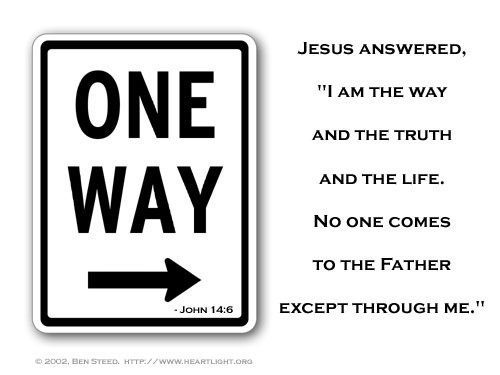
Jesus said to him, “I am the way, the truth, and the life. No one comes to the Father except through Me. (John 14:6)

So the first, and primary, thing we must understand is that the truth is a person — Jesus Christ. The ramifications of that are tremendous! In making that statement affirming His identity as “the Truth” Jesus was also saying a lot about what the truth is NOT.

1. The truth is not a set of teachings. Before you react, let me explain. Jesus and the Apostles taught many things, all of which are true. They are factually without error. But they are true because they come from He who is “the truth”. The correct teachings of the Bible are there to tell us ABOUT the truth, and as far as each of them goes, the provide illumination on a part of the picture of Christ. Don’t mistake what I am saying. False teaching is a big deal, because it draws us away from Jesus, who is the source of truth and paints a false picture for us. One good way of discerning truth, especially if someone is using Bible verses on us, is to ask whether or not the teaching in question magnifies Christ Jesus or magnifies us.

2. We can know the truth. Yes, we can have an intimate, personal relationship with the Truth. But that does not mean we will have the full, clear, perfected set of doctrines in our little brains. Full illumination is reserved for the eternal state. For now, we must follow after Jesus and take in pieces of truth for spiritual nourishment along the way. That means putting up with people whose plates look different than our own. They may see some things more clearly than we do. Paul, when talking about the eternal state, put it this way:

For now we see through a glass, darkly; but then face to face: now I know in part; but then shall I know even as also I am known. And now abideth faith, hope, charity, these three; but the greatest of these is charity. (1 Corinthians 13:12, 13 KJV)

On our best day, when we are most attuned to the Spirit and are the most receptive, we still see through a glass darkly.

3. We must follow after things in their proper order. Jesus is the way to truth and life. We find the truth by following Jesus Christ. We don’t sit down and try to once and for all figure out a perfect doctrinal set of teachings and use them to find Christ. No, we follow after Christ and He gives is spiritual food and teaches us line upon line, precept upon precept.

For precept must be upon precept, precept upon precept, Line upon line, line upon line, Here a little, there a little.” (Isaiah 28:10 NKJV)

4. Jesus is the full revelation of God, and we need seek nowhere else for truth. God has revealed Himself in Jesus Christ (Hebrews 1:1-2). The Holy Spirit uses the power of the Word to draw us to Christ (John 12:32; Romans 10:17). As long as we are putting first things first, and following after Jesus, the Truth will reveal truth to us through the living and active Word of God (Hebrews 4:12-13).

Be patient with yourself. There have been many times I have been frustrated by my lack of discernment or by not being rock solid on exact definitions of everything I believe. But that is okay. As long as I am following after Jesus, and nurturing my relationship with Him through prayer and feasting in the Word, my dark glass will slowly become easier to see through. Remember that we are not following after a philosophy, but after a person — the person of Jesus Christ.

20130127-091609.jpg

Arriving At Your Predestination

There some words that can stir up strong opinions when discussing matters of Christian faith. Predestination is one of those words. I am a big fan of word pictures that help to explain things, and there is one that I have rolled around in my head and want to share. It has to do with “in Him” and its relation to what “predestination” really means.

There is an airline, and all of its flights are on time, are never too full for one more passenger to come along. (Okay, remember this is only an illustration)
The planes are scheduled ahead of time for specific destinations. You could even say they are predestined to go there. By default, all of the seats on that plane are also predestined to go to the same destination as the rest of the plane, since they are bolted in.

We all have the opportunity to get a ticket, but they cost more than we could ever hope to pay. Flights to heaven, via stopovers in justification, sanctification and glorification, are not cheap! We could give up hope, but someone has been kind enough to point out that there are all the tickets we need, and the price for them has already been paid. The tickets are being offered to us, and all we have to do is believe it, go get the ticket, and proceed to the gate, where we will board the plane.

Well this is Good News, so we do just that. We go accept the ticket and go to the boarding are, where we then get inside the plane. You see, the plane has been prescheduled, or predestined, to go to its destination. And so are we, by virtue of the fact that we are in the plane (i.e. in Him). Before the foundation of the world, it was determined that all who were on board would go to where they needed to go.

Unfortunately, there are some people who don’t make it onto the aircraft. Some didn’t believe that anyone would be so generous as to pay for such an expensive ticket. They don’t believe the announcement and never go and take the ticket. We’re they destined to be left out? Collectively, yes they were, since it was determined that all who did not board the plane would be left.

There is another group who went and got the tickets, but thought they could go on staying inside the safe and comfortable terminal. They run around telling everyone that they got a free ticket, but since they never act on it and obey the instruction to get onto the plane, they are left behind as well. Plus, those who did not believe the message in the first place see them as fools, since in the end they are no different than the ones with no ticket at all.

So when you get a chance, read about what it is like on the plane. Read Ephesians chapter 1 and look for the phase “in Him” and remember what privileges and benefits there are to being onboard with Jesus.

20130110-182541.jpg

It Will Never Lose Its Power

I have had some experience with pharmaceutical sales, and one of the questions asked by doctors about a drug is whether or not it loses efficacy over time. In other words, does the medication work well at first, but over time loses its effect on the condition that is being treated? What I want to talk about is something that definitely does not lose efficacy over time. In fact, it is still the most powerful cure in the universe. It is the blood of Jesus!

The apostle Peter talks about the blood this way:

knowing that you were not redeemed with corruptible things, like silver or gold, from your aimless conduct received by tradition from your fathers, but with the precious blood of Christ, as of a lamb without blemish and without spot. (I Peter 1:18, 19 NKJV)

The blood is something precious. Its value is far above that of silver or gold. This blood is the cure for the most deadly disease in existence. It is used to bring spiritually dead people back to life! You may wonder if we baptize dead people. I would say that, yes, we do. Every one of them starts of spiritually dead. They are then made alive by the blood of Christ!

For if the blood of bulls and goats and the ashes of a heifer, sprinkling the unclean, sanctifies for the purifying of the flesh, how much more shall the blood of Christ, who through the eternal Spirit offered Himself without spot to God, cleanse your conscience from dead works to serve the living God? (Hebrews 9:13, 14)

Our sin had separated us from a holy God. We were without hope of curing ourselves, and were completely alienated from God. But the blood of Christ changed all of that!

But now in Christ Jesus you who once were far off have been brought near by the blood of Christ. (Ephesians 2:13 NKJV)

Even though we were enemies of God, Christ died for us in order to demonstrate His love for us. We have gone from being enemies of God to having peace with God! (Colossians 1:20)

There was a song written by Andrae Crouch many years ago ago the blood of Jesus, that said that the blood would never lose its power. Even though it was shed for us nearly 2000 years ago, it is just as potent as ever. It will save the worst sinner today the same way it would save one back then. The words of the chorus say, “it reaches to the highest mountain“. Even when we are on the mountaintop and have intimate communion with God, we still are only there because of the blood that was shed for us back at Calvary. Then it continues with “and it flows to the lowest valley“. No matter how far we have wandered in sin; no matter how far into the depths of wickedness our life has plunged, the blood of Jesus will still reach us right where we are if we will only appropriate it.

The words of John at the beginning of the Revelation some it up best:

and from Jesus Christ, the faithful witness, the firstborn from the dead, and the ruler over the kings of the earth. To Him who loved us and washed us from our sins in His own blood, and has made us kings and priests to His God and Father, to Him be glory and dominion forever and ever. Amen. (Revelation 1:5, 6 NKJV)

20130107-012907.jpg

Receiving Answers

Let’s take a look at 1 John 3:22 for a moment, because I believe there are some things here that we can discover if we are careful and take our time. For context, I will begin at the previous verse.

Beloved, if our heart does not condemn us, we have confidence before God; and whatever we ask we receive from Him, because we keep His commandments and do the things that are pleasing in His sight. (1 John 3:21, 22 NASB)

On the surface, if we don’t read closely enough, we can misconstrue what John is saying here. He is not saying that we earn our answers to prayer from God. Well then, what is he saying here?

First of all, lets see what is meant by keeping his commandments. The statement itself implies that we are in a saved condition. Over in chapter 2 John has said,

“By this we know that we have come to know Him, if we keep His commandments. (1 John 2:3)”

If we know Him, we are going know what kinds of thongs to ask Him that would be in accordance with His will.

Another thing to notice is that John separates keeping His commandments and doing what is pleasing in His sight. That is because what John means by keeping His commandments is stated in the following verse. We are to love one another. This fits in with what Jesus Christ said are the two greatest commandments — love God and love neighbor. In addition, it meshes nicely with what Paul wrote in 1 Corinthians 13 about everything we doing being useless if it is not done in love.

So rather than a cold legalism and getting our prayers heard by keeping our spiritual checklist filled out, he is talking about doing things that are pleasing in His sight that spring from our love for God and each other.our love for each other will keep us from selfish prayers. Our love for God will cause us to pray “not my will but yours be done”. When we ask for things that are within the will of God, we receive them. When we submit our prayers to the Father’s will, we are confessing that He knows best and will give us what is for our good, even though we may not know what to ask for.

So prayer that is a conversation between those in relationship with Christ, who are walking in love, and asking for God’s will to be done, will always be answered. As our knowledge of God grows, we will not only love Him more, but be even more eager to please Him in all we say and do. When we ask from that foundation, we will have all that God wills for us to have and will rejoice that He knows what is best for us.

20130102-004922.jpg

Don’t Miss Dinner

One of my favorite sayings is, “Call me anything you want, but don’t call me late for supper!” Shared meals are very special, and they were especially so in the ancient Near Eastern cultures. With that in mind, Jesus took the opportunity while reclining at a meal to illustrate the Kingdom of God. I think it would be beneficial to take a look at Luke and draw some lessons for ourselves from the text.

When one of those who reclined at the table with Him heard these things, he said to Him, “The one who will eat bread in the kingdom of God is blessed! ” Then He told him: “A man was giving a large banquet and invited many. At the time of the banquet, he sent his slave to tell those who were invited, ‘Come, because everything is now ready.’ (Luke 14:15-17 HCSB)

Jesus sets the stage for the parable by describing a large banquet for which invitations had already been sent. What is implied here is that the invitations had been accepted by those to whom they had been sent. To back out on such an invitation was considered a sign of disrespect and showed that the host’s feelings were not a priority for the guest. One by one, the servants come back with a list of excuses instead of a list of guests.

“But without exception they all began to make excuses. The first one said to him, ‘I have bought a field, and I must go out and see it. I ask you to excuse me.’ “Another said, ‘I have bought five yoke of oxen, and I’m going to try them out. I ask you to excuse me.’ “And another said, ‘I just got married, and therefore I’m unable to come.’ (Luke 14:18-20)

What are represented here are responses of those who had previously accepted the invitation, but had other things come up that they considered a higher priority. There is a warning here for those of us who have committed to following Jesus but have let other things get in the way of our service to God. And these things are not what we might assume them to be. They aren’t sex, drugs, and rock and roll. They are not lying, killing and cheating. Let’s take a closer look, and in so doing remind ourselves to keep these things from hindering our spiritual service.

“The first one said to him, ‘I have bought a field, and I must go out and see it. I ask you to excuse me.’ (Luke 14:18b)

The recently purchased field represents possessions, or our “stuff” becoming more important than spiritual matters. Notice, Jesus is not saying that it is wrong to own a field. He is saying that the things we possess should never take precedence over the things of God. And yet how many, in pursuit of worldly wealth, forfeit their souls?

For what is a man profited, if he gain the whole world, and lose or forfeit his own self? (Luke 9:25 ASV)

Another one said, ‘I have bought five yoke of oxen, and I am going to try them out; please consider me excused.’ (Luke 14:19 NASB)

A yoke of oxen were used in the daily tasks of making a living. As such, they represent our work or career. Again, Jesus is not saying that we should not work to support our families. But when career growth and advancement takes a priority over our spiritual advancement and growth, then it has become an idol and has put God in second place in our lives. The same could be said of someone who keeps their faith under wraps because it might hurt their promotion potential if people thought they were an on fire Christian. While employment is a legitimate need, the Lord’s work must come first.

Another one said, ‘I have married a wife, and for that reason I cannot come.’ (Luke 14:20 NASB)

This statement represents relationships with friends and family. As before, we cannot let fear of rejection by those who are close to us keep us from obeying God. This can be the most difficult to overcome, but in the end, it is our relationship with God that will matter most in eternity. When we are strong and unashamed in our walk with God, then those same friends and relatives are the ones who may be drawn to Christ by our example.

In the end, each of these things, possessions, professions, and relationships are not evil in and of themselves. But when they, or anything else, become more important than obeying God, then they are idols. They very things that started off as blessings become the things that condemn us. So I would encourage all of of us to evaluate ourselves and see if any of these has becomes an idol for us, and adjust our lives to out God first in all things. And if you have not come to Christ because your fear what you might have to give up, or are afraid it will cost you a job or a relationship, put eternity first, come to Christ in obedient faith, and don’t let anything keep you out of the Kingdom!

20121231-005451.jpg